TRIANTHA: THE HIDDEN CARNIVORE

The Twelfth Carnivore

Carnivorous Plants by Cordelia Molloy. Source: Science Photo Library

Since Darwin’s groundbreaking monograph on carnivorous plants, scientists have recognized only 11 independent origins of plant carnivory.
In 2021, a group of botanists from the University of British Columbia discovered that Triantha occidentalis has the ability to capture and digest insects using sticky hairs on its flowering stem, thereby revealing a new lineage of carnivorous plants.
Among monocots, Triantha represents the only known example of a sticky-trap mechanism and a clearly documented case of holocarnivory, characterized by the secretion of digestive enzymes used to process prey.
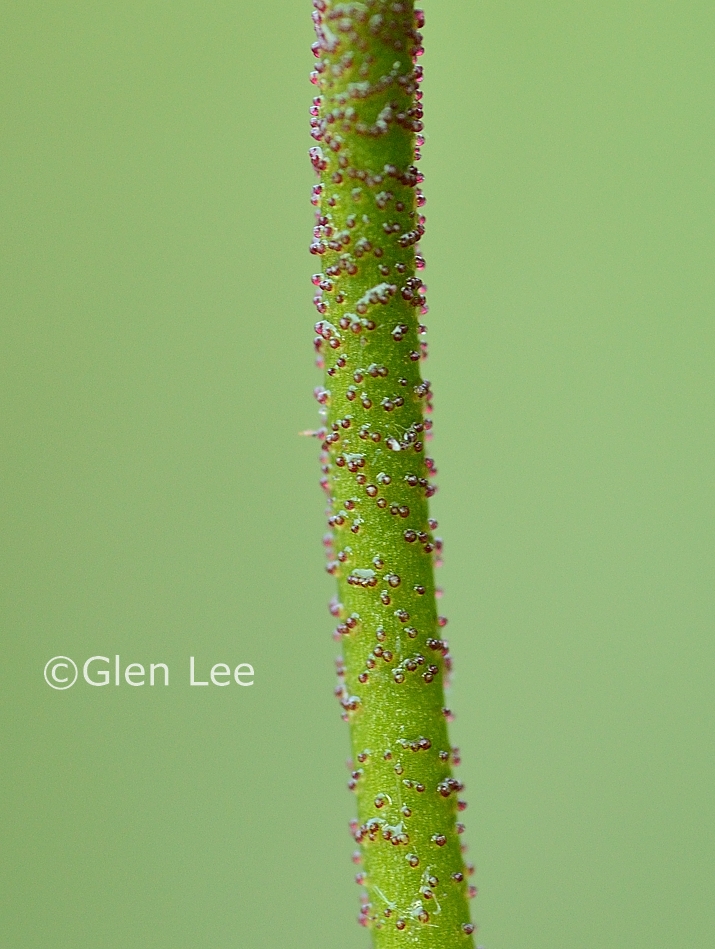
Upper stem sticky with glandular hairs.

Brown sticky hairs on upper stem of Trianthia glutinosa.

Source: Glen Lee by www.saskwildflower.ca

A UNIQUE TRAP

Unlike most carnivorous plants, which keep their traps away from their flowers, Triantha places its sticky glandular hairs directly on the flowering stem. This unusual arrangement allows the plant to capture small insects such as flies, while avoiding larger pollinators like bees.

As a result, the plant can obtain nutrients from its prey without significantly interfering with pollination, making Triantha one of the most unusual carnivorous plants known to science.

SPECIES

Click on a species to visit its dedicated page: